WELLOO Tools: A Distributor Site That Answers the Four Questions First
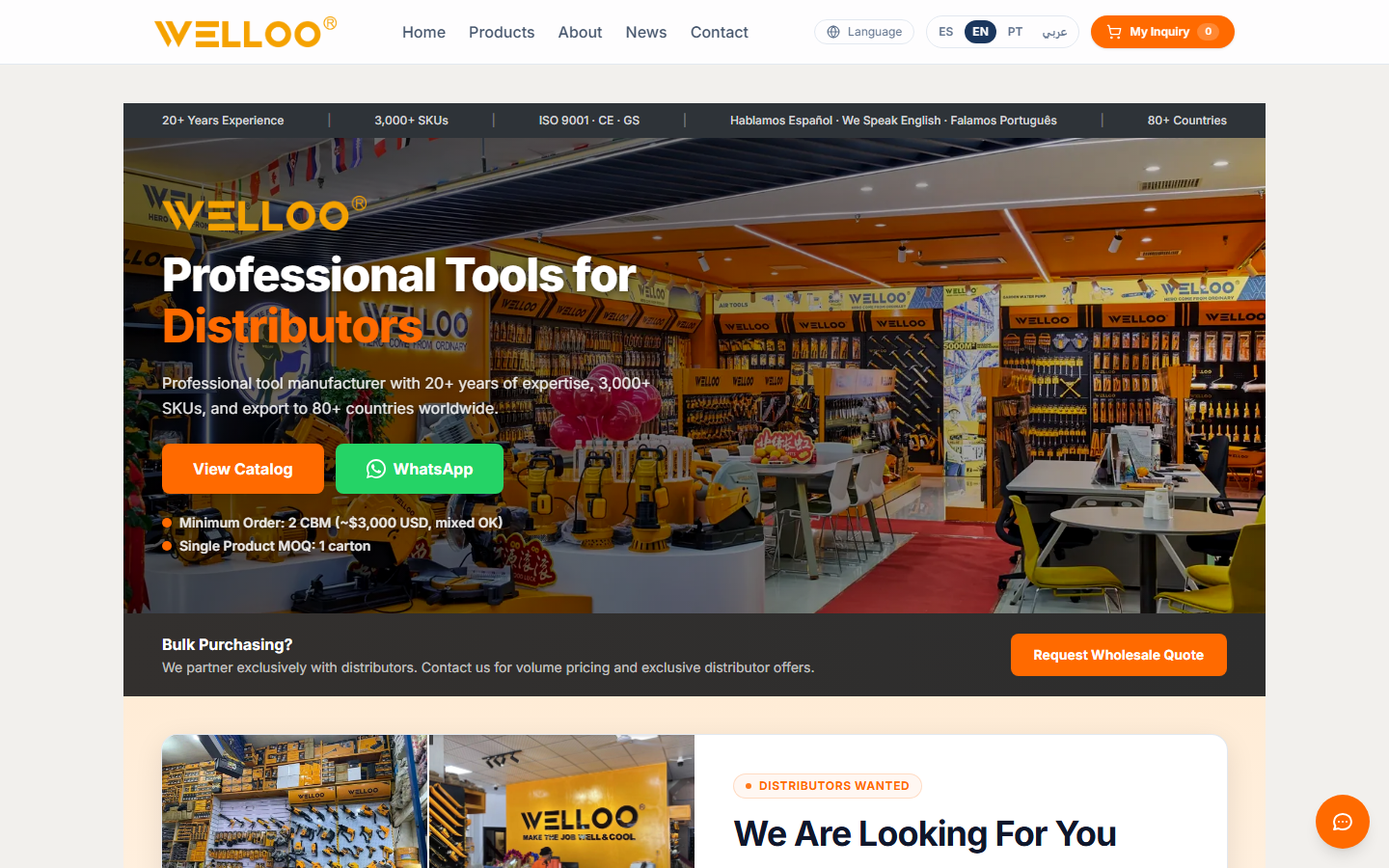
WELLOO's old site had a problem that is common among Chinese tool exporters: it was built to look like a company, not to answer a distributor's questions. Visitors landed on a homepage full of factory photos, scrolled for a while, and left without ever finding out what a first order would cost or how many SKUs they could mix.
We rebuilt the English site around the way a distributor actually buys tools: by category, by carton, by container.
What was wrong with the version we started from
The catalog was the biggest issue. WELLOO carries more than 3,000 SKUs across power tools, hand tools, garden tools and accessories, sourced from over 1,000 partner factories. On the old site, most of that range existed only inside downloadable PDF catalogs. A buyer searching for a specific item had no page to land on, which meant no page for Google to index and nothing to send to a colleague for approval.
Second problem: the commercial terms were invisible. Minimum order, carton quantities, lead times, and whether mixed orders were allowed — all of it lived in email threads. Distributors who need to calculate landed cost before they can commit were being asked to start a conversation just to get the numbers.
Third: the site behaved like a single-market brochure. WELLOO sells into 80+ countries and its sales team works in Spanish, English and Portuguese. The old structure had one language front door and no clear path for a buyer in Mexico City versus one in Lagos.
Fourth, and quieter: there was no proof of stock. WELLOO keeps 80% of its catalog in a 10,000 m² warehouse and dispatches stock items in 15 days. That is a genuine advantage over factories quoting 45-day production runs, and the site never said so.
What we changed
We started with the taxonomy. Instead of mirroring the internal product list, we grouped the catalog into four buying categories and gave each category landing page a filter set based on what buyers ask for first: voltage, drive size, material, and pack quantity. Every SKU that could carry its own page got one — title, spec table, carton dimensions, MOQ in cartons, and a photograph on a plain background. The PDF catalogs stayed, but as a download for people who already know what they want, not as the only way in.
Next, we put the commercial terms on the page. Minimum order of 2 CBM (roughly USD 3,000, mixed items allowed) and single-product MOQ of one carton now sit in the hero area of the homepage and repeat on every product page. This one decision changed the quality of incoming inquiries more than any design work: buyers who write in already know the entry point, so the first email tends to include a quantity instead of a request for the price list.
We then built the stock signal into the product template. Items held in the warehouse carry a dispatch badge with the 15-day window; made-to-order items show the production lead time instead. No invented numbers, just the two real fulfilment paths the company already runs.
For the language layer, we kept English as the primary site and structured Spanish and Portuguese as parallel versions with their own navigation labels, not machine-translated copies of the English menu. The sales team covers all three languages, so the site hands off to WhatsApp with the right language context.
Finally, the distributor program got its own page. Nine years after launching its own brand in 2018, WELLOO now sells mainly through regional distributors, and the terms — territory protection, store design support, shelf planning, training materials — were scattered across sales decks. Putting them on one page with a short application form turned an informal process into something a prospect can read at midnight without asking anyone.
Where it landed
The rebuilt site is faster on mobile, which matters because a large share of tool buyers browse from a phone in a warehouse. More importantly, the inquiry mix shifted. Fewer one-line messages asking for a catalog, more messages naming a category, a carton count and a destination port.
We also gave the site a structure that can absorb growth. With 3,000+ SKUs and 1,000+ supplier factories, the catalog will keep changing; the template set we built lets the team add a product family without touching the layout.
The lesson from this project is not complicated. A distributor-facing site does not need to be beautiful. It needs to answer four questions before the buyer has to ask: what do you make, what is the minimum, how fast can you ship, and who else in my region buys from you. WELLOO had good answers to all four. The old site just never said them out loud.
-
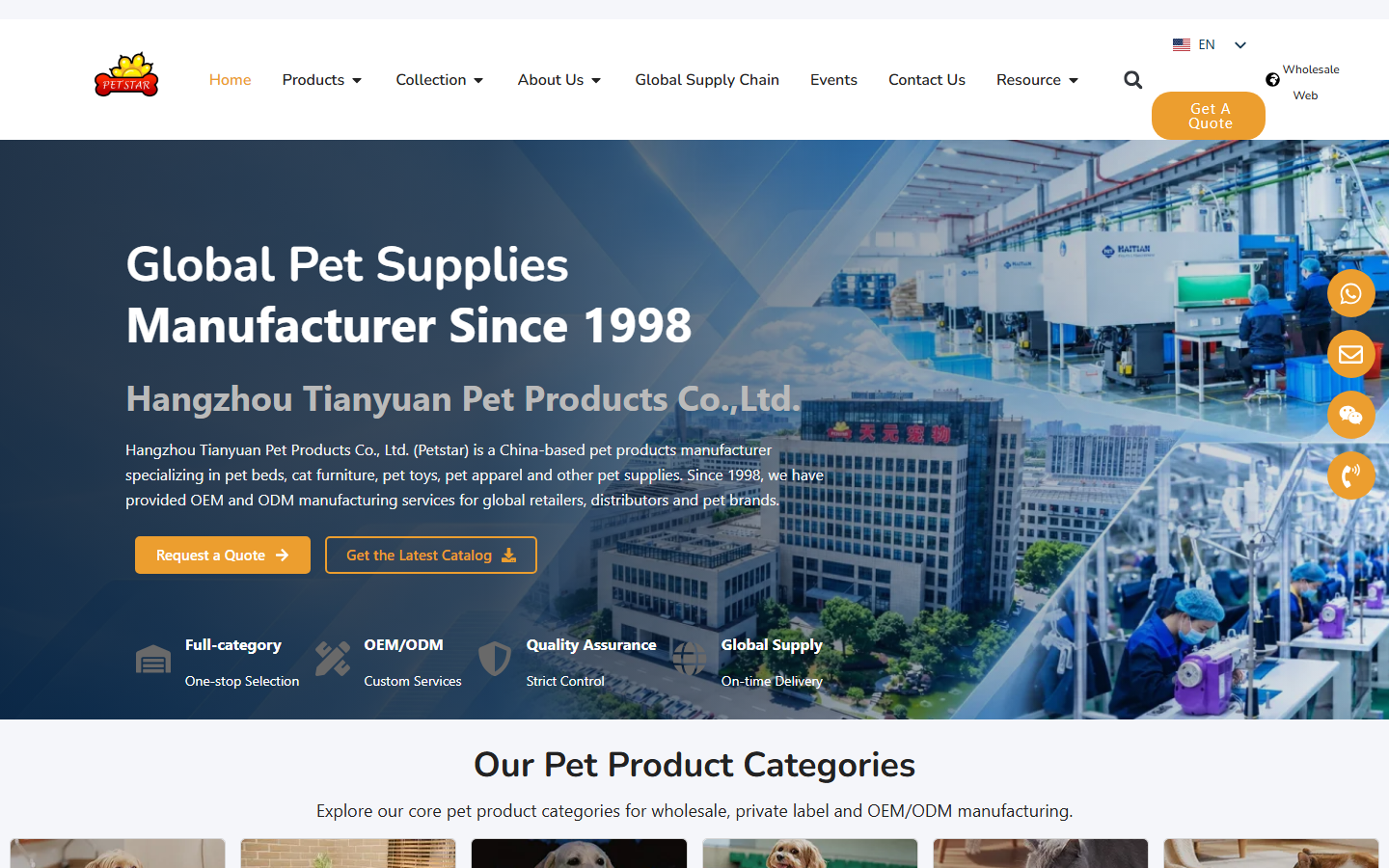
Petstar: Making 30,000 Pet Products Navigable in One Screen
Hangzhou Tianyuan Pet Products — Petstar on its export s...
-
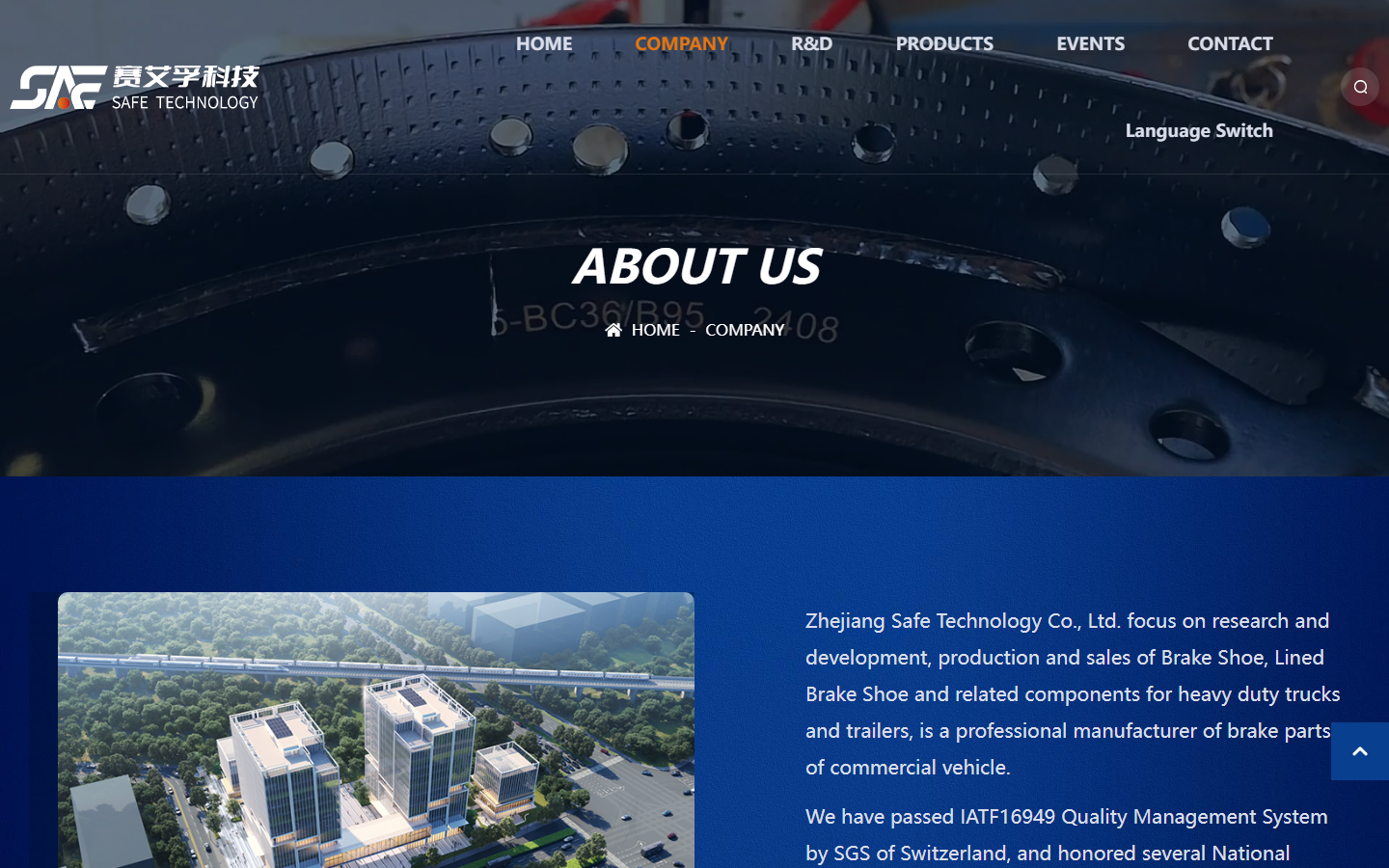
Safe Technology: A Brake Shoe Catalogue Buyers Can Specify From
Signed a website development agreement with Zhejiang Saf...
-
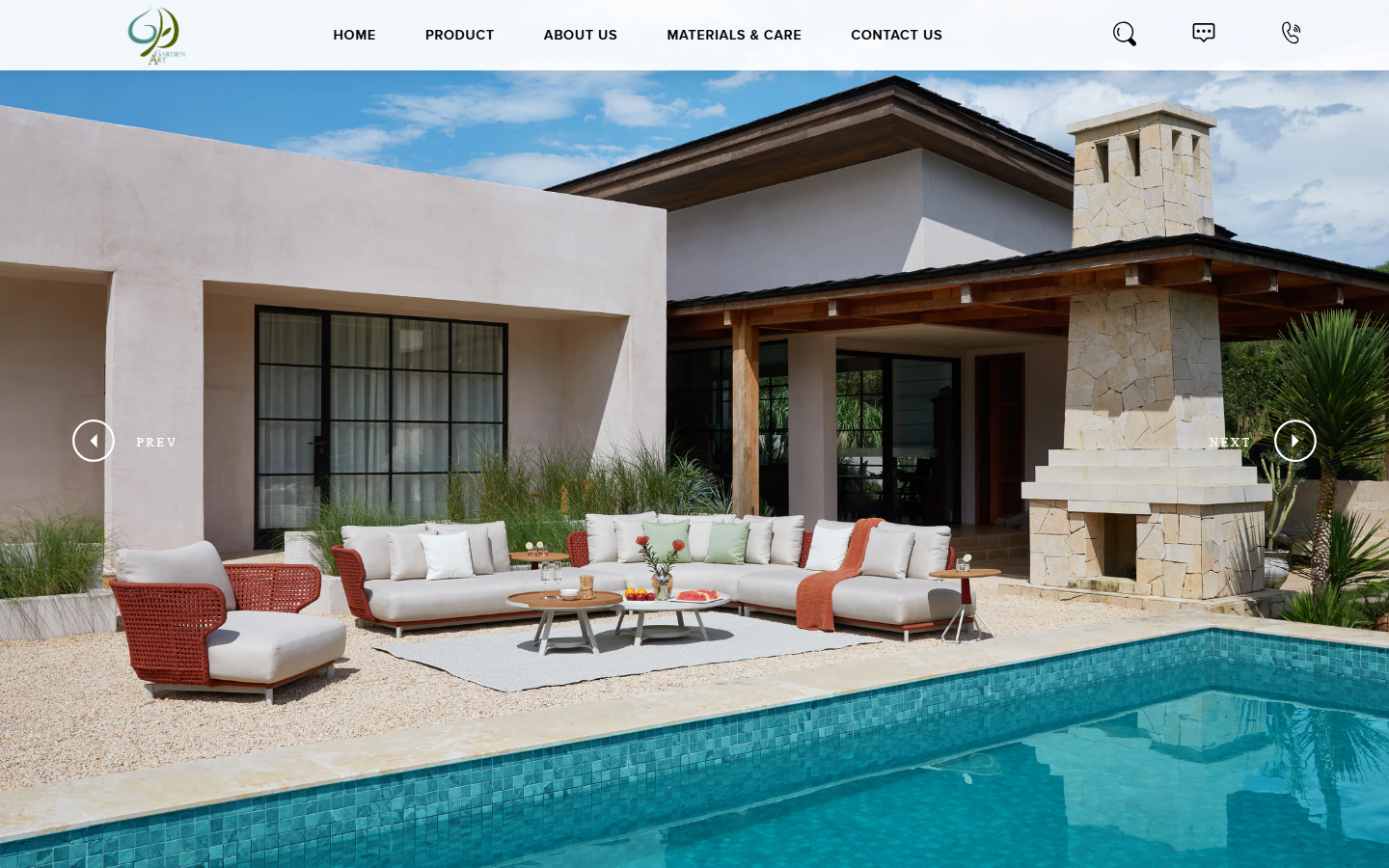
Gardenart: Turning 270 Products Into a Catalog Retailers Can Buy From
The new Gardenart site sends buyers deeper than the old ...


